HOW COULD YOU LEAD IN YOUR FAMILY AND AT SCHOOL NOT TO WASTE WATER AT HOME, NOT TO CONTAMINATE WATER, NOT TO THROW RUBBISH ON STREETS AND RIVERS?

Some of the impacts of the water pollution problem are:
- Degradation or deterioration of the environment, resource or vital liquid water, depletion of natural resources, loss of biodiversity, ecosystems and destruction of the landscape.
- Consumption of contaminated water.
- Respiratory, chronic, cardiac, gastrointestinal diseases, dysentery, fever, cholera, asthma, bronchitis, among many others that weaken physical, mental and emotional health.
- Shortage of drinking water suitable for human consumption.
- Proliferation of pathogenic organisms, poverty, hunger.
SOLUTIONS
the main one, environmental education as the tool for any ecological problem.

To start the care at home, first in the kitchen:
How do fats, oils and grease cause sewer backups?
When liquid fats, oils and grease are washed down the sink or toilet, these materials solidify and stick to the inside of your plumbing or to City sewer pipes. This can result in a blockage and lead to sewer backups
how to properly dispose of fat, oil and grease
- Let grease cool and harden, then scrape it from trays, plates, pots and pans, and grills into your green bin.
- Pour liquid cooking oil or any liquid food waste into a biodegradable container (such as a milk carton) and place into your green bin.
- Absorb all liquid fats, oils, or grease with paper towels and place the soiled paper towels into your green bin

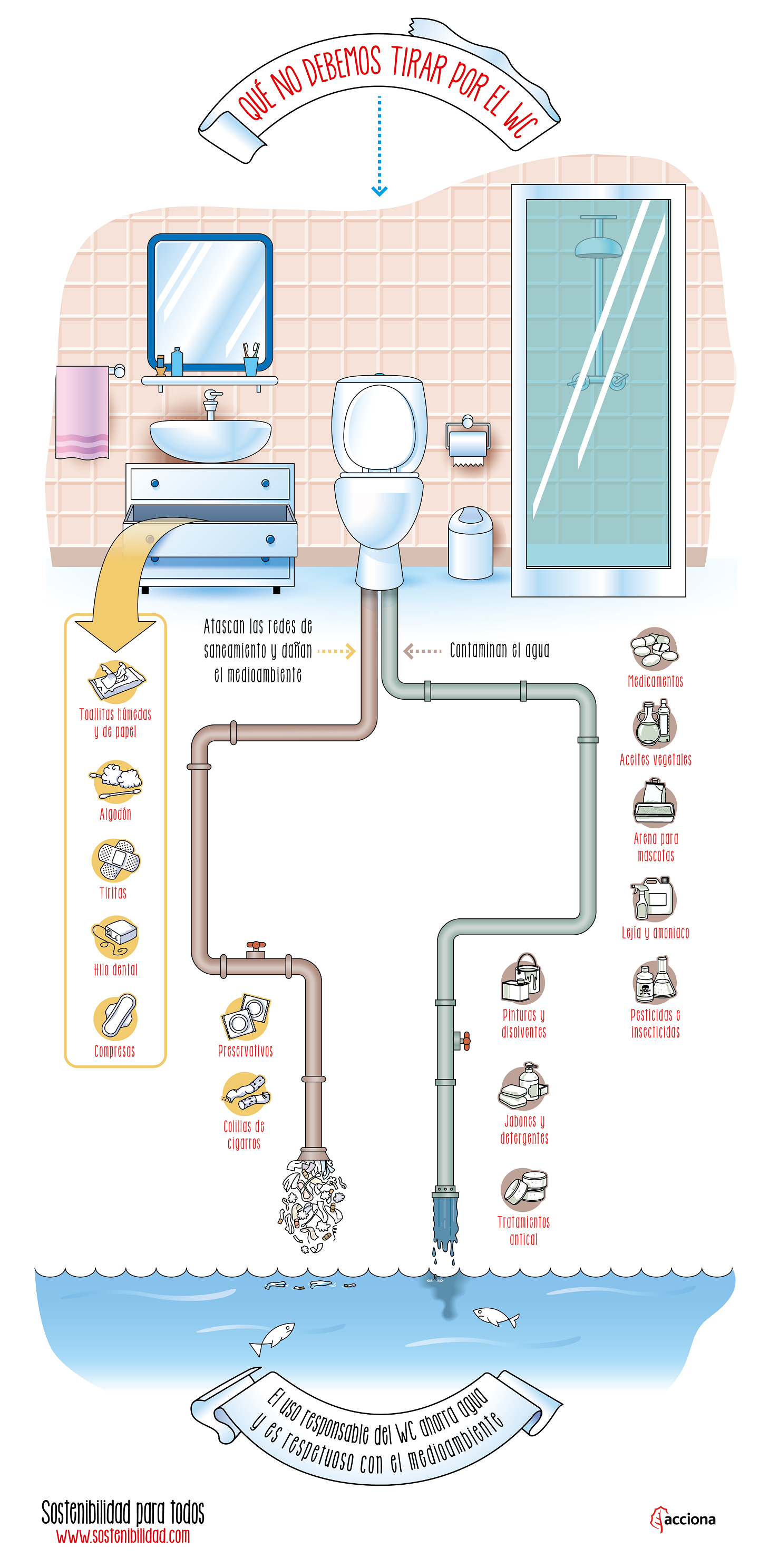
Your toilet is not a green bin or a garbage can. Flushing certain items can result in a sewer backup into your home and can create problems at the City's wastewater treatment plant.
Only flush the three P – pee, poo and toilet paper! These are the only items that belong in your toilet.
never be flushed down the toilet:
- Personal care wipes/baby wipes
- Diapers
- Cotton swabs
- Hair
- Dental floss
- Tampons
- Sanitary products
- Condoms
- Old medicines
- Grease/fat from food
- As always the main, but not the only one, environmental education as the tool for any ecological problem.
- Not to contaminate and to reduce our footprint or environmental impact.
- To make a rational and efficient use of the vital liquid.
- The sustainable development, the economy and environmental technology.
- Recycling or promoting the 3r as reduce, recycle and reuse.
- Renewable energy sources such as solar energy.
- Reduce and combat any other environmental problem such as deforestation.
- To consume responsibly, avoiding irresponsible consumerism and consequently the generation of garbage or solid waste.
- Reduce hazardous agents or materials.
- Reduce the use of and dependence on plastic.
- Formulate and enforce laws on environmental conservation.
- Encourage reforestation.
- Reduce chemical pesticides, as well as the treatment of wastewater.
- Promote consumption, mobility and sustainable tourism, ecological agriculture, natural products, sanitation, environmental conservation and any sustainable strategy.

EXCELLENT!! CONGRATULATIONS!!
ResponderEliminar